What is Grow Up?
Emotional, relational, and spiritual maturity. Not as an idea, but as something we practise in our actual life.
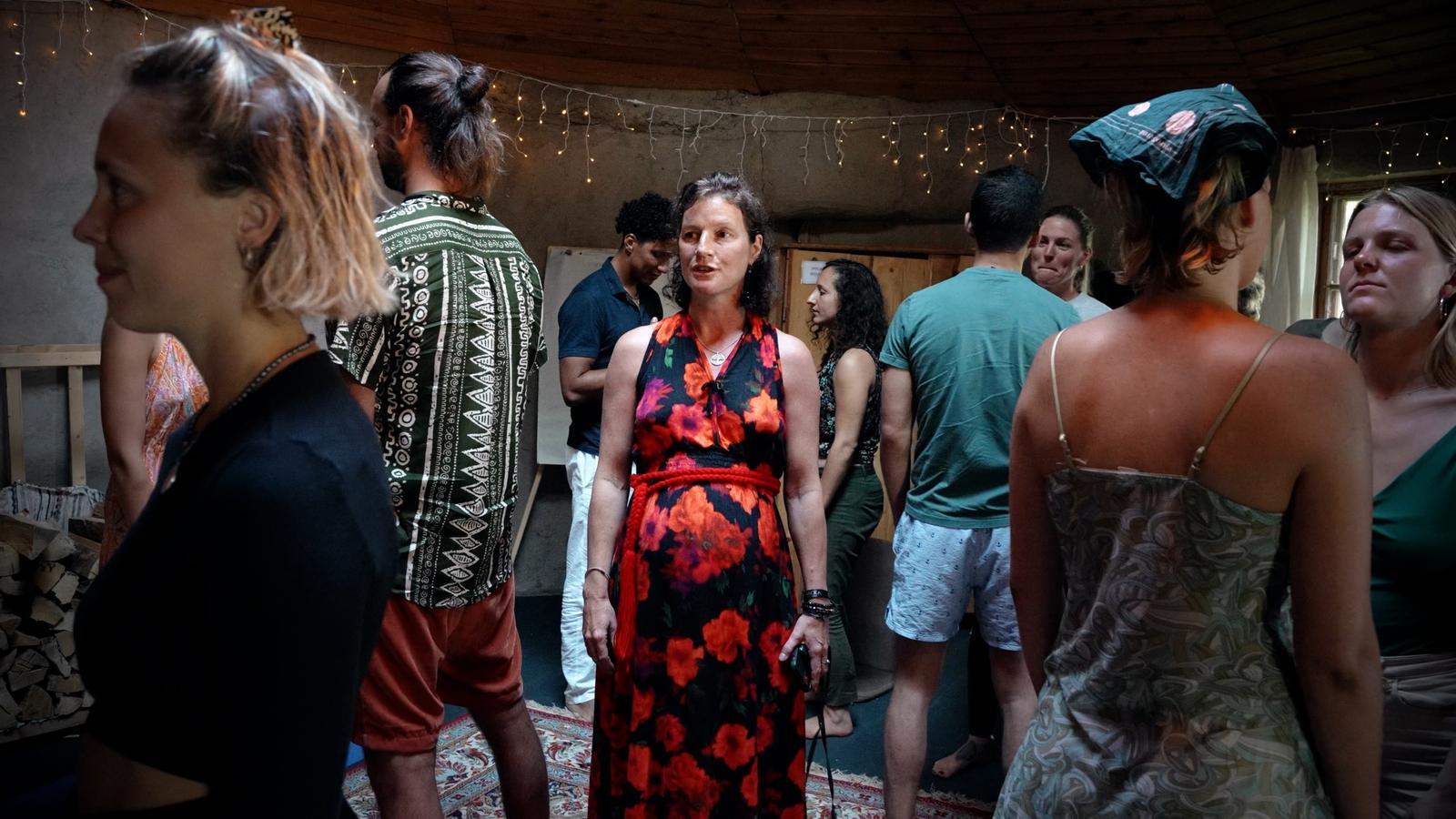
A lot of inner work teaches us how to go inward. We learn to feel, to express, to understand ourselves.
But fewer of us have learned how to stay with ourselves while we are in life, in relationship, in parenting, in work, in responsibility, in pressure.
“What do I feel?”
Can I stay connected to myself and self-regulate in real time,
while I feel it.
Not separate from everything. Not dissolved in it.
Many spiritual traditions speak about oneness, about being part of something bigger. There is truth in that. Growing up includes another movement: discovering that we are also someone.
It’s the capacity to belong without losing yourself. To be in connection and still know where we end and another person begins. To care deeply without becoming responsible for everything around us.
I stay in me, and in connection.
Belonging without losing yourself. Knowing where you end and another person begins.
Most of us didn’t grow up around people who lived from this place.
We live in a society where, for most people, the options are either to merge and lose yourself, or to separate yourself. So many parents are present one moment and disconnected the next, because they didn’t have emotionally mature parents either.
So we learned to adapt.
We weren’t allowed to stay in ourselves and belong at the same time. So we did whatever helped us stay connected. Those strategies made sense. But they made it harder to stay connected to ourselves.
Grow Up is a practice of slowly untangling this.
Can I stay with myself and be with others at the same time? We begin to notice what is ours and what is not. What we actually need, and what we have learned to chase.
The solution is not only “take my space” or “have boundaries”. It is staying in me and staying in connection, at the same time.
Often the needs are not complicated.
They can still be difficult to listen to, because listening means feeling what is underneath, and that requires capacity. This is also why this work cannot be done alone.
Friendship, dance & play.
In many cultures, regulation is held in community through rhythm, movement, ritual and shared experience. Today we call it nervous system regulation, and I believe these ancient tools are necessary to Grow Up.
“As we expand in joy and love, we build resilience to hold our pain and fear.”— Li Tadaa
A practice, not a concept.
Grow Up is lived in the body, in relationships, in the small daily moments when we choose response over reaction.
- 01Regulating your nervous system
- 02Setting boundaries that do not harden you
- 03Trusting the body’s signals
- 04Growing up from old childhood patterns
Enter where you are.
You can enter the work in different ways, depending on where you are in your journey.
Ready to begin?
Explore our events, or book a free call with Li.